 Written by
  Edited by
  Edited by

You have some money to put in the bank, but which account is the best fit? With so many choices, it can be hard to decide. Should you use a savings account, open a retirement account, or try a certificate of deposit? This guide will help you choose the type of bank account that works best for your needs.
A financial advisor can help you find the right bank and retirement accounts for your situation.
1. Savings Accounts
A savings account is one of the most straightforward types of bank accounts. You deposit money into a savings account and then you can withdraw that money when you need it. You can access your money in person at a bank, through an ATM or online.
Banks encourage people to use savings accounts by offering interest on people’s money. Interest rates vary from bank to bank and are based on the overall economy. Online banks, which do not have physical locations, typically offer higher interest rates than traditional banks. The majority of banks use compound interest, but how frequently it compounds will depend on the bank.
If you are considering a savings account, look for accounts with the highest interest rates and the least fees. Some accounts require you to deposit a certain amount in order to open an account. There may also be a minimum amount that you need to maintain in your account at all times. Your bank may also limit the number of free withdrawals per month. Savings accounts work well for people who are just starting to save money or want to build good saving habits.
2. Checking Accounts
The advantage of a checking account is that you can use your money to make payments. You can write checks and use a debit card and the money you spend is withdrawn directly from your account. If your bank allows online banking, you can also use a checking account to send online bill payments.
Unlike a savings account, your money won’t earn much interest in a checking account. Generally, banks offer very low-interest rates or no interest at all on their checking accounts. You can usually make as many transactions as you want with your checking account, though some banks charge a fee for making more than a specific number of transactions or for writing more than a certain number of checks per month.
As with savings accounts, there are a few bank fees to watch out for with checking accounts.
- There is usually a minimum deposit needed to open an account. This fee is often around $25 but varies from bank to bank. Once you have an account, you may need to maintain a minimum balance. If your account goes below that minimum, you will have to pay a fee. 1
- Depending on the bank and checking account, you may also need to deposit a certain amount in your checking account each month.
Fees vary between banks, and not all banks even charge them. Make sure to ask about fees and review the account fee schedule before opening an account.
3. Certificate of Deposit (CD)
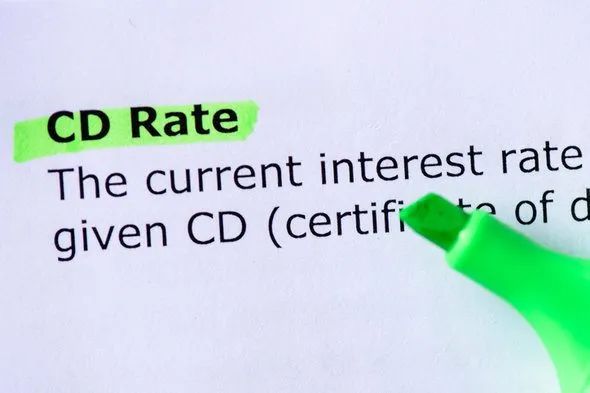
A certificate of deposit, or CD, typically earns you interest at a higher rate than either a savings or checking account. The catch is that a CD has a specified term length, so you cannot touch your money during that term. A term can range anywhere from three months to 10 years (120 months). In return for not having access to your money, you earn a higher interest rate than you would with just a savings account.
Let’s say you have $250. You can call or go to your bank and tell them you want to put $250 in a six-month CD. They will be able to tell you the current CD interest rates and how much you can expect to earn. Once you buy the CD, you won’t be able to use your money for six months but it will earn interest during that time.
When the CD matures (reaches the end of its full term) you will receive your original $250 plus whatever interest has accrued. When the CD is close to maturing, you will have to tell your bank if you intend to withdraw the money. If not, you may end up reinvesting your money into another CD of the same value and term length.
A CD is a great way to earn money because of its higher interest rates. However, you shouldn’t put money into a CD if you will need the money before the end of the term. It is possible to withdraw your money early, but you will pay a penalty. The penalty often equals six months of interest.
4. Money Market Accounts
Money market accounts offer a combination of features from the three types of bank accounts above. They provide a safe place to store your money and you can withdraw your money whenever you need it, like a savings account. You can use checks and debit cards like you can with a checking account. Money market accounts earn interest at higher rates than a savings account, like a CD.
With that great combination of features, why doesn’t everyone just get a money market account? One reason is the cost. Banks require a high minimum deposit to open a money market account. The minimum deposit to open an account can be thousands of dollars. You also need to maintain a high balance to avoid additional fees.
Checks and debit cards work with a money market account, but Regulation D applies the same way it does with a savings account. You can only make six transfers out of a money market account each month. A bank may also restrict the number of checks that you can use per month. Still, a money market account is a good option if you can afford it. It also becomes a better option the more money you have.
The interest rates are tiered, so you will have a higher interest rate if you have more money in your account. Money market accounts are also useful for people who keep high amounts of money in their checking accounts.
5. Individual Retirement Accounts (IRAs)
Individual retirement accounts, known as IRAs, allow you to save for retirement. You might have a retirement plan at work, like a 401(k), but you can manage an IRA completely independently of where you work. There are two main types of IRAs: traditional and Roth.
A traditional IRA is tax-deductible. You can put money into a traditional IRA without paying any income tax. This is a great way to lower your taxable income each year. You can then withdraw the money once you reach the age of 59.5. If you withdraw before that age, you will have to pay income tax on your withdrawal, plus a big early withdrawal penalty. You will need to pay income taxes on withdrawals you make after age 59.5 as well, but your money should have grown significantly by then.
A Roth IRA offers more flexibility but uses after-tax dollars. You pay income tax on the money upfront, and then it grows tax-free in your Roth IRA. You can withdraw your contributions before age 59.5, and you don’t have to pay any income tax on the withdrawals. A Roth IRA is also useful for non-retirement savings. You could use it to save for a big expense, like the future down payment on a house, or as a place to put your emergency fund.
6. Brokerage Accounts
With a brokerage account, you can buy and sell different types of investments, such as stocks, bonds, exchange-traded funds (ETFs) and mutual funds. You can also have an IRA, 401(k) or health savings account with your brokerage, depending on the broker you choose.
There are two types of brokerage accounts: cash accounts and margin accounts. Cash accounts use cash to complete a transaction. It is paid upfront in full.
Margin accounts, on the other hand, allow you to borrow money from your brokerage to complete the order. The securities you own then become your collateral. However, this is considered a riskier form of investing, with cash securities often preferred by beginner investors.
Brokerage accounts allow you to invest in a wide variety of investments without any of the contribution limits and withdrawal penalties that can plague other types of accounts. These accounts play a critical role when planning a long-term financial strategy, especially for retirement planning.
What FDIC and NCUA Insurance Actually Covers
Deposit insurance protects the money you keep at banks and credit unions. The Federal Deposit Insurance Corporation covers deposits at member banks up to $250,000 per depositor, per institution, per ownership category. That last part matters. An individual checking account and an individual savings account at the same bank are in the same ownership category, so together they share a single $250,000 limit.
A joint account is treated as a separate ownership category from individual accounts, with each co-owner covered up to $250,000 for their share. A depositor with $250,000 in an individual savings account and $500,000 in a joint account with a spouse at the same bank has more coverage than someone with $750,000 spread across individual accounts at one institution.2
Credit unions are covered by the National Credit Union Administration rather than the FDIC, but the protection works the same way and the limits are identical. Being a member of a credit union rather than a bank doesn’t reduce your deposit protection.
What the insurance doesn’t cover is worth knowing as well. Investment products held through a bank’s brokerage, including stocks, bonds, mutual funds and annuities, are not deposits and are not insured by the FDIC even if you bought them at a bank branch. A money market mutual fund is different from a money market deposit account in this respect. The deposit account is insured. The mutual fund is not. If your balances at a single institution approach or exceed $250,000 in a single ownership category, spreading the excess across a second institution is the straightforward way to maintain full coverage. Some banks also participate in programs that extend coverage across a network of institutions, which can be worth asking about if you’re managing a large cash position.
How to Choose the Right Account for Your Situation
Most people need more than one type of account, and the right combination depends on what you need. Think about your accounts by purpose rather than by product. Money you might need on short notice belongs somewhere accessible and stable. A checking account handles daily spending and bill payments. A savings account or money market account works for an emergency fund, short-term goals or cash you want to keep separate from what you spend regularly. The priority for these accounts is access and safety, not return. Chasing a slightly higher interest rate matters less than knowing the money will be there when you need it.
Money you’re saving toward a specific goal on a defined timeline, a home purchase in two or three years, a planned expense you’re building toward, works well in a CD if the timeline is fixed and you won’t need the funds before the term ends. The higher rate compensates you for committing to a withdrawal date. If the timeline is uncertain, a high-yield savings account gives you comparable returns with more flexibility.
Money you don’t expect to touch for many years belongs in accounts built for long-term growth. An IRA or employer-sponsored retirement account offers tax advantages specifically designed for that time horizon. A taxable brokerage account gives you access to the same investment options without contribution limits or withdrawal restrictions, which makes it useful once you’ve maximized tax-advantaged options or are saving for goals that don’t fit a retirement account’s rules.
The accounts you use should reflect the purpose of the money, not just the features of the account. Keeping those two things aligned is the simplest way to avoid putting short-term money somewhere illiquid or leaving long-term money sitting in a low-yield account it has no reason to be in.
Bottom Line

There are a lot of ways you can put your money in the bank. The right type of bank account for you will depend on what you need to do with your money. From saving money with a savings account to needing access to liquidity with a checking or money market account, there are plenty of options for your needs. No matter what type of bank account you choose, look for an FDIC-insured bank and an account with as few fees as possible.
Tips to Help you Choose the Right Type of Bank Account
- A financial advisor can provide further guidance on selecting the right retirement account and applying it to your personal situation. If you don’t have a financial advisor, finding one doesn’t have to be hard. SmartAsset’s free tool matches you with vetted financial advisors who serve your area, and you can have a free introductory call with your advisor matches to decide which one you feel is right for you. If you’re ready to find an advisor who can help you achieve your financial goals, get started now.
- If you don’t have any money in the bank, a savings account is a good place to start. They’re simple and your money will work for you by earning interest. Look for a savings account with the highest interest rates. There more you can earn, the better! Online banks usually offer higher interest rates than physical banks so you might want to consider an online bank vs. a traditional bank.
- The best savings and checking accounts have minimal fees. Find an account that costs very little to start and has a minimum balance requirement. Understand any fees the bank charges because fees can cost you a lot in the long run. To get you started, here are six bank fees and how to avoid them.
Photo credit: ©iStock.com/Alina555, ©iStock.com/Sohel_Parvez_Haque, ©iStock.com/simonkr
Article Sources
All articles are reviewed and updated by SmartAsset’s fact-checkers for accuracy. Visit our Editorial Policy for more details on our overall journalistic standards.
- “Open a Wells Fargo Everyday Checking Account Online | Wells Fargo.” Wells Fargo Home Page, https://www.wellsfargo.com/checking/everyday/. Accessed May 6, 2026.