 Written by
  Edited by
  Edited by

If you create a living trust in Louisiana, you can better protect your assets and your legacy. Unlike a will, a living trust allows your estate to bypass the probate process. This saves your beneficiaries time, money, and stress during an already difficult period. Louisiana’s unique legal system, based on the Napoleonic Code rather than common law, creates some distinct challenges for trusts. Depending on the size of your estate or your long-term financial plans, a living trust may not help you.This is why you should understand how to create a living trust in Louisiana before making any final decisions.
A financial advisor can answer your questions about estate planning, probate, inheritance, and more.
Creating a Living Trust in Louisiana
A living trust in Louisiana offers residents a valuable estate planning tool. It helps them avoid probate and provides greater control over asset distribution. Unlike wills, these trusts take effect during your lifetime and continue after death. This allows for the seamless transfer of property to your beneficiaries. Here are six common steps to make a living trust in the Bayou State:
- Decide which type of trust you want: If you’re unmarried, you’ll probably want to go with a single trust. If you’re married, a joint trust might be best for you. You and your spouse can use a joint trust to store your assets. This applies to property owned independently, as well as jointly held property like homes and cars.
- Take stock of your property: You can store most of what you own inside the trust. This includes stocks, bonds, or physical assets like jewelry. Now is also the time to gather corresponding documents for this property, like certificates of stock ownership or car titles.
- Choose a trustee: You can name yourself as the trustee or someone else. However, if you name yourself, you’ll also need to choose a successor trustee to take over when you die. This person will be responsible for managing your trust and doling out its property to the beneficiaries you choose. Now is also a good time to select those beneficiaries.
- Create a trust document: You can create your own trust. Do it yourself using a computer program or with the help of a lawyer.
- Sign, or execute, the trust: Your signing must take place in front of a notary public.
- Put your assets inside the trust: This is called funding the trust. While you can do it yourself, it might make sense to hire a lawyer to help with the paperwork.
What Is a Living Trust?
A living trust creates a legal framework for the transfer of property and assets. A trustee manages and distributes the property placed in the trust to designated beneficiaries. The trust creator, also known as the grantor or settlor, can serve as trustee or that person can pick someone else, likely a child or trusted relative.
Two basic types of living trusts exist: irrevocable living trusts and revocable living trusts. Irrevocable living trusts are permanent. The grantor can’t modify the trust or remove assets from it without permission from everyone named in the trust. The trust fully takes ownership of the property placed in it. It also pays any taxes associated with the property.
Revocable living trusts are easier to modify after the fact. The grantor can alter the trust as needed and remove property when he or she wants. Additionally, the grantor maintains ownership of the property in the trust and pays any relevant taxes on it as normal.
How Much Does It Cost to Create a Living Trust in Louisiana?
The price of making a living trust depends on the method you use to form it. One way is to do DIY estate planning and create the trust document yourself online. This will cost you a few hundred dollars or so. You can also use the services of a lawyer, for which you’ll probably pay between $1,000 and $5,000 depending on the lawyer, their rate, and the size of your estate. 1
Though it is cheaper to make your trust document yourself, some problems can arise with DIY estate planning. If you’re not comfortable doing the research and paying attention to all of the details that come with properly establishing a living trust, you should strongly consider hiring an estate planning attorney. Make sure the lawyer is a trust expert, not just an estate planner. Also, look closely at the attorney’s fees before you start working together so you know exactly how much you’ll pay.
Why Get a Living Trust in Louisiana?
Most people get a living trust in order to avoid probate, a process that most estates go through to prove the will. The process can be time-consuming, costly and an invasion of privacy as private matters become public record. Also, because Louisiana’s legal development was tied to French and Spanish colonization before it became part of the United States, the state uses the term “succession” instead of probate.
While many states have adopted the Uniform Probate Code to simplify the probate or succession process, Louisiana is not one of them. This means that a living trust may be especially helpful in the Bayou State.
There are other reasons to get a living trust, too. Living trusts allow you to specify when you want to leave property to a minor. Until the child reaches a certain age, the property the child will someday inherit will remain in the living trust under the trustee’s management. If you become incapacitated a living trust will also prove useful. Because you’ve already named a trustee, you’ll avoid conservatorship.
Who Should Get a Living Trust in Louisiana?
Living trusts are not just for the wealthy. With the Uniform Probate Code not in place in Louisiana, a living trust can be useful even for estates that are relatively small. If your estate is worth less than $75,000, though, the state offers a simplified probate process. 2 Estates below this threshold may not need a living trust.
Though there are several upsides to creating a living trust, there are downsides to consider as you weigh your estate planning options. A living trust is more costly and difficult to create than a will. It can also increase the potential of problems arising after you die because it provides a longer time for the filing of potential court challenges.
Living Trusts vs. Wills
Living trusts offer immediate asset management if you become incapacitated, allowing your successor trustee to step in without court intervention. Wills only take effect after death, requiring a potentially lengthy probate process before distributing assets. This distinction makes trusts particularly valuable for those concerned about potential incapacity. If you make a living trust, you’ll still need a will. Wills can direct property that’s not in the trust, and handles the following items:
- Name an executor
- Provide instructions on how to pay taxes and debts
- Select managers for the children’s property
- Establish guardianship for children who are minors
Here’s how wills and living trusts measure up.
Living Trusts vs. Wills
| Living Trusts | Wills | |
|---|---|---|
| Names a property beneficiary | Yes | Yes |
| Allows revisions to be made | Depends on type | Yes |
| Avoids probate court | Yes | No |
| Requires a notary | Yes | No |
| Names guardians for children | No | Yes |
| Names an executor | No | Yes |
| Requires witnesses | No | Yes |
Living Trusts and Taxes in Louisiana
Your living trust is unlikely to impact your taxes. Still, if you’re in the middle of planning your estate, it probably makes sense to get a basic idea of the Louisiana estate tax and the Louisiana inheritance tax to see how they might impact you.
Luckily, there is no estate tax or inheritance tax in Louisiana. The federal estate tax only applies to estates that are worth $15 million, or $30 million for couples.
Common Mistakes to Avoid When Creating a Living Trust in Louisiana
Setting up a living trust can feel like a one-and-done task, but the work continues even after you sign the final documents. A trust only works if it actually holds your assets, which means you have to retitle all accounts, property, and investment portfolios in its name. When you skip that step, those assets may still go through Louisiana’s succession process.
Louisiana’s legal system adds more complexity. The state’s forced heirship rules can give certain heirs, particularly younger or dependent children, a legal claim to part of the estate. If you create a trust without considering those rights, it can lead to complications if expectations don’t match what the law requires.
Choosing a trustee presents liability, too. The person you name will be responsible for managing assets, following your instructions, and communicating with beneficiaries. If your trustee can’t stay organized, trustworthy, or remain neutral, it can create unnecessary stress and even conflict during an already difficult time.
For married couples, community property laws make things more complicated. The court often considers assets acquired during the marriage as jointly owned, and moving them into a trust requires careful handling. Without clear planning, it can become unclear how those assets are categorized, which may lead to confusion or disagreements.
Another mistake is relying too heavily on generic online forms. While cost-effective, they don’t always come designed with Louisiana’s legal framework in mind. That mismatch can result in documents that don’t fully comply with state requirements or fail to address important details.
You must also keep your trust current. As circumstances shift, whether financially or within your family, your original plan may no longer reflect what you want. Letting a trust sit unchanged for years can lead to outcomes you didn’t intend, simply because it no longer matches your current situation.
Bottom Line
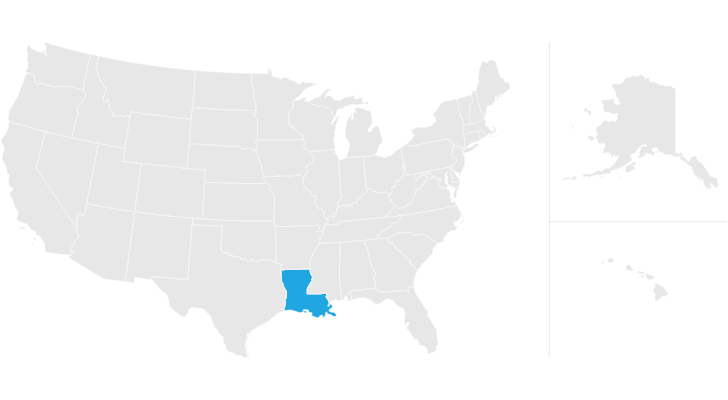
Learning how to create a living trust in Louisiana can provide significant benefits for your estate plan. By establishing a trust, you can ensure your assets are distributed according to your wishes while potentially avoiding the lengthy probate process that’s common in Louisiana’s legal system. Remember that Louisiana’s unique civil law system makes certain aspects of trust creation different from other states, so working with an attorney familiar with Louisiana trust law is highly recommended.
Estate Planning Tips
- Everyone needs help sometimes, and estate planning is no different. A financial advisor has the expertise to provide this support and help you protect your financial assets over the long haul. Finding a financial advisor doesn’t have to be hard. SmartAsset’s free tool matches you with vetted financial advisors who serve your area, and you can have a free introductory call with your advisor matches to decide which one you feel is right for you. If you’re ready to find an advisor who can help you achieve your financial goals, get started now.
- One asset you can’t store in a living trust is a 401(k) plan. You can name the trust as a beneficiary, though, so make sure to take that step if you want the money in your account to pay out to your trust once you die.
Photo credit: ©iStock.com/skynesher, ©iStock.com/grandriver
Article Sources
All articles are reviewed and updated by SmartAsset’s fact-checkers for accuracy. Visit our Editorial Policy for more details on our overall journalistic standards.
- David Stonecipher. “Living Trust Cost: Prices for DIY, Online, & Lawyers.” LegalShield, Mar. 5, 2026, https://www.legalshield.com/blog/living-trust-cost.
- https://www.mylouisianasuccession.com/wp/pdf/probate-ebook-la.pdf. Accessed Apr. 9, 2026.