 Edited by
  Edited by

Creating a last will and testament is an important undertaking that honors your legacy and protects your loved ones. The process of creating a will in the state of Texas is relatively straightforward. However, there are specific rules and requirements you must adhere to for your will to be legal and valid in the Lone Star State.
A financial advisor with estate planning experience can be a valuable resource as you plan for your assets and loved ones in the state of Texas.
Texas Will Requirements
Creating a valid will is a critical step in ensuring that your final wishes are honored in Texas.
However, Texas law sets forth specific stipulations for drafting a valid will:
- Minimum age. To make a will in Texas, individuals must be at least 18 years old or legally emancipated through marriage or military service.
- Mental competency. An individual must be of sound mind to draft a will. This means understanding the nature and extent of their property and appointing logical heirs to their estate. They must have the ability to make informed decisions about asset distribution.
- In writing. You must document your will in writing, whether typed or handwritten. Handwritten wills, or holographic wills, are valid if entirely in the testator’s handwriting and signed.
- Voluntary creation. The will must be voluntarily created, free from coercion or undue influence. Any form of pressure or manipulation compromising the testator’s desires can invalidate a will.
- Witnesses. To officially execute a formal will in Texas, you must sign the document in the presence of two competent witnesses who are at least 14 years old and have no stake in the will. This helps to prevent conflicts of interest.
It’s important to remember that this guide is specific to Texas. Individuals in other jurisdictions should seek information relevant to their local regulations.
Steps for Creating a Will in Texas
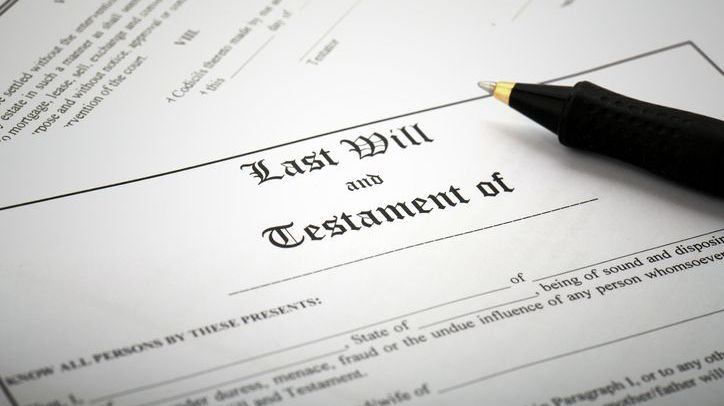
In Texas, failing to have a will can result in intestate succession. This is a process in which state laws determine asset distribution in ways that may not align with the decedent’s desires.
The creation of a will is a structured process, with each step helping to form a binding legal document.
1. Pick Your Type of Will
In Texas, you have the choice between two types of wills:
- Formal will. A formal will requires witnesses for validation. Someone with a more complex range of assets may choose a formal will for the added legal robustness it offers.
- Holographic will. A holographic will is a handwritten document that the testator executes without witnesses. Someone with a straightforward estate may opt for a holographic will for its simplicity.
The decision often depends on the complexity of your estate and personal preferences.
The Texas Supreme Court provides official will forms that serve as a useful starting point. For instance, the state has a form for single, widowed and divorced individuals with children, as well as a form for married individuals with no children. These forms are available on the Texas Supreme Court’s website, providing a direct and user-friendly way to draft your will.
It’s advisable to consult an estate planning lawyer who can help ensure your will fully captures your intentions and legal requirements.
2. Choose an Executor
An executor plays a crucial role in managing your estate according to your will.
Their responsibilities can be complex and sometimes challenging, such as settling disputes among beneficiaries or navigating the probate process. Therefore, it’s essential to choose someone who is capable and willing to assume these tasks.
Before making your decision, talk to your potential executors to ensure they understand and accept their responsibilities.
3. Select Beneficiaries
Carefully consider who will inherit your property. Be sure to provide explicit instructions to avoid ambiguity and ensure your wishes are carried out.
Keep in mind that Texas is a community property state. This means that both spouses jointly own the assets that they acquire during marriage.
This legal framework affects the distribution of assets upon death, since jointly-owned property will simply transfer to the surviving spouse.
4. Assign a Guardian
If you have minor children, you can use your will to appoint a guardian to care for them.
Discuss this decision with potential guardians to confirm their willingness and ability to take on the role. This will help ensure you safeguard your children’s best interests.
5. Sign Your Will
If you’re creating a formal will in Texas, you must sign the document in front of two witnesses.
The witnesses must be legally capable of understanding the document they are signing. In Texas, this means they should be at least 14 years old and of sound mind.
6. Safeguard Your Will
After signing, store your will in a secure location, such as a safe or with a trusted attorney. You can also consider digital options, such as secure online storage services.
Be aware of the risks of each method. For example, safes may be inaccessible in emergencies.
Informing your executor and close family of the storage location ensures they can find your will when needed.
7. Review and Update
Life changes, such as marriage or the birth of a child, require a review of your will.
For example, marriage in Texas can revoke a previous will, and divorce might alter how property is bequeathed to a former spouse. Use life events as reminders to update your will accordingly.
Does You Have to Notarize a Will in Texas?
Notarization is not a prerequisite for a will to be considered valid under Texas law.
However, this can make your will self-proving and expedite the probate process. Probate is the legal procedure that settles the estate of a deceased person.
You can add a self-proving will to this process without the need for witness testimony, which can otherwise be a time-consuming step. Making your will self-proving is a simple process involving the signing an affidavit in front of a notary public.
Understanding Probate in Texas
Probate is the legal process that leads to the resolution of a person’s estate. It’s carried out under the auspices of a court.
In Texas, it may involve several areas:
- Validation of a will
- Appointment of an executor or administrator
- Identification and notification of creditors and beneficiaries
- Estate asset valuation
- Debt resolution
- Tax planning
- Distribution of remaining assets to rightful heirs
Independent Administration vs. Dependent Administration
In Texas, an estate can be settled either through independent or dependent administration.
Independent Administration
Independent administration of estates offers an alternative to the traditional probate process.
It provides an expedited means of settling an estate with less supervision. A testament to Texas law’s flexibility, it allows an executor or administrator to perform their duties with a significant degree of autonomy. This helps streamline the process while reducing associated costs.
This form of administration is permissible when the decedent has explicitly expressed this wish in their will. In the absence of such a provision, all beneficiaries must consent to it.
Dependent Administration
Dependent administration, on the other hand, requires comprehensive court oversight.
This approach is necessary in situations where the estate in question is fraught with complexities. This may include conflicts among siblings and a contested will. It also applies in situations when there is no will at all.
In these cases, the court’s more stringent supervision ensures the close monitoring of administrator actions. It requires administrators to seek approval for all significant decisions.
Tips for Avoiding Probate in Texas
By avoiding probate in Texas, you can save your loved ones time, money and stress after your passing. With thoughtful estate planning and the right strategy, you can ensure your assets transfer smoothly to your beneficiaries without lengthy court involvement.
These strategies can help.
Use Beneficiary Designations and Payable-on-Death Accounts
Many financial assets allow you to name beneficiaries directly. These include retirement accounts, life insurance policies and bank accounts.
Upon your death, these assets transfer automatically to the listed individuals without probate.
Create a Revocable Living Trust
With a revocable living trust, you can transfer ownership of your assets into the trust while you’re alive and control how they’re managed. When you pass away, the trust distributes assets directly to beneficiaries, bypassing probate entirely.
Although setting up a trust involves some upfront effort, it can greatly reduce legal costs and delays later.
Take Advantage of Simplified Probate Options
Texas law offers small estate affidavits for estates below $75,000. 1
These estates can transfer assets to heirs without full probate. This helps speed up the probate process while reducing costs for families with modest estates.
However, it’s still important to organize titles, beneficiary forms and estate documents in advance to ensure eligibility.
Keep Property Titles and Deeds Current
Real estate in Texas can avoid probate with a transfer-on-death (TOD) deed. This names a beneficiary who automatically inherits the property.
Joint ownership with right of survivorship offers similar benefits. Like TOD deeds, the surviving owner immediately assumes full ownership.
Regularly reviewing and updating your property records is essential to keeping your estate plan effective.
Consult an Estate Planning Professional
Because Texas has specific probate and property laws, consulting an estate planning attorney or financial advisor is highly recommended.
A professional can ensure that your documents are legally sound and tailored to your goals. They can also help you coordinate multiple strategies for the most efficient transfer of assets.
Together, you can plan ahead to minimize or avoid probate while ensuring that your estate passes according to your wishes.
How a Financial Advisor Can Help You Avoid Probate in Texas
A financial advisor can help ensure your estate plan is structured so that assets pass efficiently to your heirs with as little court involvement as possible.
While an estate attorney prepares the legal documents, a financial advisor can help coordinate your accounts, asset ownership and beneficiary designations so they align with your overall plan.
Beneficiary Designations
One of the most effective probate-avoidance tools is a regularly updated beneficiary designation.
Several assets generally transfer directly to named beneficiaries rather than passing through probate.
- IRAs
- 401(k)s
- Life insurance policies
- Annuities
- Payable-on-death accounts
This is where a financial advisor’s value can review these designations across your accounts to ensure they reflect your current wishes and work alongside the rest of your estate plan.
Asset Titling
Asset titling is another important consideration.
Certain forms of ownership allow property to pass automatically to a surviving owner. For married couples in Texas, community property with right of survivorship can transfer assets outside of probate. Other jointly owned assets may qualify for similar treatment.
A financial advisor can help identify accounts and property that may benefit from updated ownership arrangements.
Revocable Living Trust
For some families, a revocable living trust may provide an additional layer of probate avoidance.
While Texas generally offers a more streamlined probate process than many other states, trusts can still be useful in many cases.
- Larger estates
- Blended families
- Property located in multiple states
- When privacy is a priority
A financial advisor can help evaluate whether the benefits justify the cost and complexity.
Ongoing Assessment
Probate planning is not a one-time task.
You should review beneficiary designations, account titles and estate documents after major life events such as marriage, divorce, the birth of a child or a significant change in assets.
Regular reviews can help identify gaps and reduce the risk that assets pass through probate when that was never the intent.
Bottom Line

Whether you want your estate to go through the full probate process or not, it’s important to draft a will. In the event of your death, this helps ensure the correct distribution of your property to your heirs and any minor children with a guardian. In Texas, the process for creating a will is relatively simple. The Texas Supreme Court has even approved different forms to help craft your will based on your marriage status and whether you have dependents.
By leveraging Texas’s legal tools and working with experienced professionals, you can simplify the process for your heirs and protect more of what you’ve built over your lifetime.
Estate Planning Tips
- A financial advisor with estate planning expertise can help you decide how to transfer your property and assets to your loved ones when you’re gone. Finding a financial advisor doesn’t have to be hard. SmartAsset’s free tool matches you with vetted financial advisors who serve your area, and you can have a free introductory call with your advisor matches to decide which one you feel is right for you. If you’re ready to find an advisor who can help you achieve your financial goals, get started now.
- When planning your estate, you may want to consider creating a living trust to hold your assets while you’re still alive. When you die, the trust becomes irrevocable and bypasses probate. However, it’s important to weigh the benefits of a trust vs. a will as you make decisions around your estate plan.
Photo credit: ©iStock.com/Дмитрий Ларичев, ©iStock.com/roberthyrons, ©iStock.com/jeffbergen
Article Sources
All articles are reviewed and updated by SmartAsset’s fact-checkers for accuracy. Visit our Editorial Policy for more details on our overall journalistic standards.
- Texas Constitution and Statutes. https://statutes.capitol.texas.gov/?tab=1&code=ES&chapter=ES.205&artSec=. Accessed 26 June 2026.