 Written by
  Edited by
  Edited by
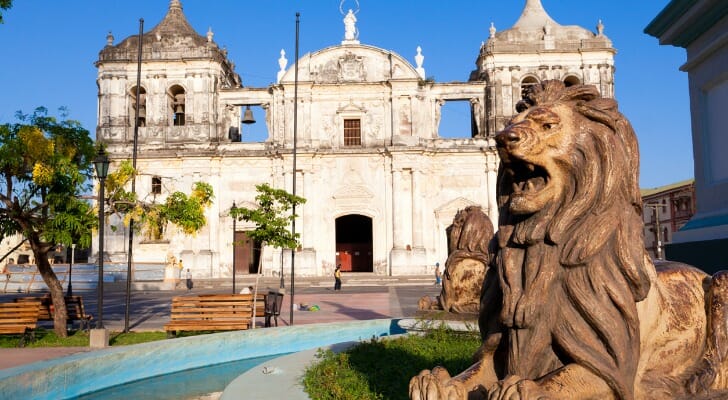
Nicaragua offers stunning coastlines along both the Pacific Ocean and the Caribbean Sea. With its picturesque mountains and Central America’s largest lake, the country provides a diverse climate and an array of outdoor activities to suit every lifestyle. For Americans, Canadians and Europeans, Nicaragua is an attractive destination for real estate, thanks to its straightforward purchasing process. Additionally, the low cost of living and high quality of life make it an ideal choice for those seeking a comfortable and affordable retirement. Here’s an overview of what to expect when retiring in Nicaragua.
Consider working with a financial advisor as you explore retirement abroad.
Getting a Visa in Nicaragua
Nicaragua has a retiree program similar to Costa Rica’s. First, someone must gain residency, then they can get a retirement visa. To gain residency in Nicaragua, a person must complete the following requirements:
- Provide a photocopy of your passport
- Include two passport photos
- Provide a birth certificate or naturalization document
- Have a clean criminal record
- Provide a health certificate
- Proof of assets equivalent to a return ticket to their country of origin.
To get a retirement visa, applicants must show that they receive a monthly equivalent of $600 in permanent income. This could be Social Security, a pension or other irrevocable income. The applicant must also spend at least 180 days per year in the country. After five years, the visa holder can qualify for citizenship.
Cost of Living in Nicaragua
Nicaragua can offer retirees relatively low day-to-day living costs, particularly when it comes to housing and transportation. Numbeo’s July 2026 data 1 gives the country a cost-of-living index of 36.01 excluding rent and a rent index of 7.18, though actual expenses will depend heavily on where you live and the lifestyle you maintain.
Housing can be one of the biggest potential savings. According to Numbeo, a one-bedroom apartment averages about $349 per month in a city center and $213 outside the center. A three-bedroom apartment averages approximately $557 in a city center and $473 outside it, although prices can vary significantly by location and property quality.
Other everyday expenses can also be manageable. Numbeo reports that a meal at an inexpensive restaurant averages about $5, while a monthly public transportation pass costs roughly $6. Basic utilities for an 85-square-meter apartment average about $96 per month, and internet service averages approximately $38.
Retirees should build a budget that goes beyond basic housing and food costs. Private healthcare, insurance, travel to the U.S., imported products and visa-related expenses can add considerably to monthly spending. Numbeo’s figures are crowdsourced averages, so they are best used as a starting point when estimating how much retirement income you may need in Nicaragua rather than as a fixed budget.
Housing Costs and How to Buy a Home in Nicaragua
Foreign residents and Nicaraguan residents can purchase property in Nicaragua. Foreigners have 100% ownership and full property rights. For this reason, many people are purchasing second homes or primary homes in Nicaragua. However, the home buying process can be tedious compared to the U.S.
Before starting the home buying process, it is wise to work with a lawyer who specializes in real estate. Nicaragua is notorious for having a lack of clear titles on many properties, both in the countryside and in large cities, and a local lawyer can help to protect you as you purchase a property.
Unlike the U.S., the home buying process starts with an offer being verbally agreed upon between a buyer and a seller. Then, a deposit of anywhere from 5% – 15% is given to the seller and the closing process is outlined. The whole process takes about two months.
The legal process begins with the lawyer writing a few checks. The first is a request for the Libertad de Gravamen, a document that will show any issues with the sale, including any legal cases and other property records. Then, the lawyer will draw up a new deed, and the buyer and seller will sign the document. At this time, the money will be transferred from the buyer to the seller. Title insurance is highly recommended.
The final steps are for the necessary parties to evaluate the property, and the buyer will pay the revenue office 4% of the value of the property. This transfer officially puts the property in the buyer’s name.
Taxes in Nicaragua
There are very few taxes on expats in Nicaragua. For example, you can import your household items free of tax up to $20,000, and your car tax-free up to $25,000 in value. Additionally, there is no tax on income earned outside of Nicaragua. The minimum age to receive these residency benefits is 45, but there are plenty of visa options and waivers that allow almost anyone to take advantage of the hospitality of Nicaraguan tax laws.
Healthcare System
As a Nicaraguan resident, you’ll be eligible for the local healthcare programs. The Nicaraguan government has a free, universal health system that is ranked among the top half of all national healthcare systems, 71st out of 191, according to the World Health Organization. While healthcare is much more accessible in the larger cities, some expats do not find the national healthcare service to be adequate.
Nicaragua has a private hospital system, as well. The healthcare costs at private hospitals will still be much lower than in the U.S. Many Nicaraguan doctors were trained in the U.S., and the quality of care is very high compared to other Central American countries.
Safety in Nicaragua
Safety is an important consideration for anyone planning to retire in Nicaragua. As of September 2026, the U.S. Department of State lists Nicaragua at “Level 3: Reconsider Travel” due to crime, health risks, wrongful detention and arbitrary enforcement of local laws. The advisory says U.S. citizens may be denied entry or prevented from leaving the country without explanation, and it warns that laws may be enforced unpredictably.
Crime is another concern, particularly in urban areas and popular tourist locations. The State Department reports that petty theft, vehicle burglaries, pickpocketing and occasional armed robberies occur, while violent crimes including robbery and assault can happen throughout the country. Police presence may also be limited outside major cities, which can affect how quickly assistance is available.
Transportation can present additional safety challenges. U.S. government employees are generally prohibited from using public transportation and from driving after dark outside certain areas because of poor road conditions, inadequate lighting and other safety risks. Retirees who choose to live in Nicaragua may therefore want to consider neighborhoods with reliable transportation, secure housing and convenient access to healthcare and other essential services.
Because conditions and government guidance can change, prospective retirees should review the latest State Department travel advisory and U.S. Embassy alerts before moving or traveling to Nicaragua. Long-term residents may also want to enroll in the Smart Traveler Enrollment Program (STEP) so they can receive security updates and make it easier for the U.S. Embassy to contact them during an emergency.
Bottom Line

Retiring in Nicaragua offers an enticing blend of affordability, natural beauty and a welcoming culture, making it an increasingly popular choice for expats. One of the most significant advantages is the low cost of living, which allows retirees to enjoy a comfortable lifestyle without breaking the bank. Housing, healthcare, and daily expenses are notably cheaper compared to many Western countries, providing an opportunity to stretch retirement savings further. Moreover, Nicaragua’s diverse landscapes, from pristine beaches to lush mountains, offer endless opportunities for exploration and relaxation.
Tips for Achieving Your Retirement Goals
- Consider talking to a financial advisor about whether you’re financially prepared to retire outside the United States. Finding a financial advisor doesn’t have to be hard. SmartAsset’s free tool matches you with vetted financial advisors who serve your area, and you can have a free introductory call with your advisor matches to decide which one you feel is right for you. If you’re ready to find an advisor who can help you achieve your financial goals, get started now.
- It’s tough to plan for your retirement if you aren’t sure what kind of costs you’ll have when you retire. To get an idea of what to expect, stop by our retirement calculator. To use this, you’ll need a few details about where you want to retire, when you want to retire and how much you have in savings.
Photo credit: ©iStock.com/-bilge, ©iStock.com/AnkNet, ©iStock.com/dimarik
Article Sources
All articles are reviewed and updated by SmartAsset’s fact-checkers for accuracy. Visit our Editorial Policy for more details on our overall journalistic standards.
- Cost of Living in Nicaragua. Prices in Nicaragua. Updated Jul 2026. (2026). Numbeo.Com. https://www.numbeo.com/cost-of-living/country_result.jsp?country=Nicaragua