 Written by
  Edited by
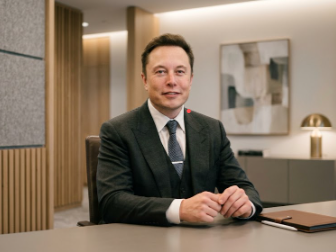
Elon Musk’s net worth is one of the largest in the world, shaped by his stakes in Tesla, SpaceX and other ventures. As of June 2026, Musk’s net worth has fluctuated around the trillion-dollar mark following SpaceX’s public market debut. SpaceX’s IPO pushed his fortune to approximately $1.1 trillion, making him the first person known to reach trillionaire status.1
For help managing your assets, consider speaking with a financial advisor.
What Is Elon Musk’s Net Worth?
Net worth is often almost impossible to precisely measure for wealthy individuals. This is due to several factors. For extremely wealthy individuals like billionaires, much of their net worth relies on self-reporting. They hold valuable assets in many forms and jurisdictions, often which are not subject to public markets or reporting.
This cohort also tends to keep much (if not most) of their wealth in market-based assets rather than cash or cash-equivalents. This means that a billionaire’s net worth fluctuates based on market value at any given time. For Elon Musk, much of his net worth is tied up in his companies Tesla, SpaceX, X and more. And when holdings are private assets, this makes it even more difficult to set a precise value.
Oracle co-founder Larry Ellison briefly surpassed Musk as the richest person in the world in September 2025 2 when shares of the tech company skyrocketed on the news of deal to build AI data centers with OpenAI, the parent company of ChatGPT. 3 However, as noted above, Musk has since regained that mantle.
Sources of Musk’s Wealth
Like most very ultra-wealthy people, Musk’s net worth fluctuates based on the market value of his assets at any given time. In general his largest sources of wealth are:
PayPal
While not a significant portion of his current wealth, Elon Musk’s fortune arguably began in 2002. This was when eBay bought PayPal for $1.5 billion. As a co-founder, Musk’s share of this sale was around $175 million. He used this money to fund several of his other ventures, which led to his current billions.
Tesla Stock
Tesla makes up the majority of Musk’s net worth. He owns approximately 13% of the electric car company. In August 2025, Tesla’s board approved a “good faith” grant of 96 million restricted shares to Elon Musk, valued at around $29–32 billion at the time. The award followed a Delaware court’s decision to void his 2018 compensation package and was structured with conditions: Musk must remain in a top executive role for two years, and any vested shares must be held until at least 2030. If the 2018 package is reinstated on appeal, the grant would be canceled.
Just weeks later, in September 2025, Tesla proposed a far larger compensation plan for Musk totaling 423.7 million shares, worth about $143.5 billion at current market prices. Unlike the earlier award, this package is performance-based, hinging on Tesla reaching extraordinary milestones, including boosting its market capitalization to $8.5 trillion. If approved, it would make Musk’s pay the largest in corporate history and further solidify his financial stake in Tesla’s long-term trajectory.
Tesla also accounts for Musk’s meteoric wealth increase in recent years. Although he has been worth billions for many years, Elon Musk’s wealth increased by an order of magnitude between 2020 and 2022. In this period, his estimated fortune grew from around $24 billion to around $220 billion. This was largely due to a surge in the price of Tesla stock, which leapt from around $14 per share to a high of $414 per share in that same time period.
For news that may affect Tesla and other stocks, sign up for the Market Minute newsletter for free.
SpaceX
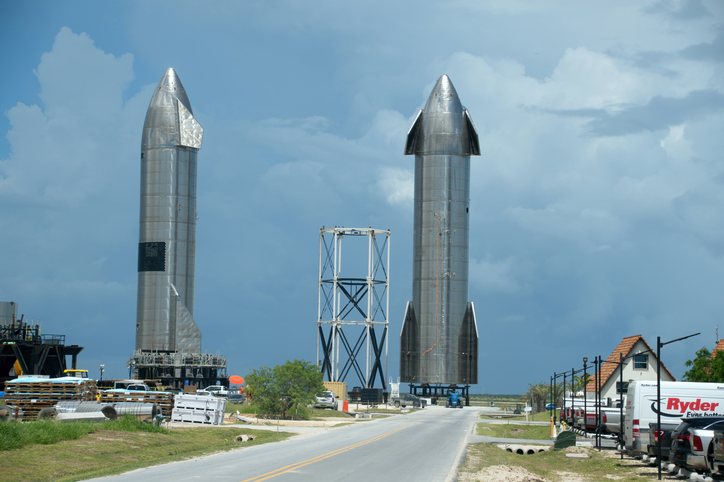
SpaceX is now likely Musk’s largest source of wealth. In June 2026, the company completed a record-setting IPO, initially priced at $135 per share. 4
SpaceX was valued around $1.75 trillion ahead of the offering and reportedly reached a valuation of about $2.1 trillion after its first day of trading. Reuters later reported that the company’s market capitalization was around $2 trillion, though the stock has been highly volatile since the IPO.
X and xAI
Elon Musk owns a controlling share of X (formerly Twitter), which he purchased in October 2022 for about $44 billion. In March 2025, Musk merged X into his AI company xAI in an all-stock deal valuing X at $33 billion (excluding debt), while xAI was valued at $80 billion in that transaction. 5
After the merger, Musk’s combined ownership in the newly formed entity xAI Holdings (which now includes X as a subsidiary) is estimated at about 59%. That means his share is worth roughly $66 billion based on the $113 billion valuation of xAI. 6
The Boring Company
The Boring Company is an infrastructure company that proposes to solve traffic jams by relocating highways underground. Musk founded the company in 2016 and his stake in the firm is currently worth an estimated $7 billion.
How Musk’s Net Worth May Affect SpaceX Investors
Elon Musk’s net worth is closely tied to SpaceX, which means changes in the company’s valuation can have an outsized effect on both his wealth and investor sentiment.
Reuters reported that SpaceX’s IPO pushed Musk’s net worth to roughly $1.1 trillion, with his SpaceX stake worth about $866 billion at the time. That level of concentration can be a double-edged sword for investors: Musk’s large ownership stake aligns his financial interests with SpaceX’s long-term performance, but it also makes the company highly dependent on his leadership, public image and strategic decisions.
For investors, Musk’s wealth may also reinforce confidence in SpaceX’s growth story, especially in areas like Starlink, space launches and AI-related infrastructure. However, valuation risk remains significant.
Reuters reported that SpaceX traded around a $2 trillion market capitalization after its IPO, with limited publicly tradable shares contributing to volatility. That means investors may need to weigh SpaceX’s long-term potential against near-term price swings and high expectations already built into the stock.
Areas of Uncertainty
As with all high-net worth individuals, there is significant uncertainty regarding Musk’s precise wealth. There are several reasons for this, but the biggest two are private assets and self-reporting.
First, private assets are notoriously difficult to value.
Very wealthy individuals tend to hold little of their wealth in cash or cash-equivalents. Instead, they generally hold most of their wealth in the form of securities and ownership stakes. Indeed, it’s common for someone like Musk to operate mostly with these assets, using shares of stock or secured loans to make large purchases rather than personal cash holdings. Many executives will even take their pay entirely in stock and options, forgoing a traditional salary.
This introduces the uncertainty common to any market assets. With publicly traded assets, like Tesla stock, this wealth becomes relatively concrete, if fast-moving. Analysts can estimate Musk’s wealth based on Tesla’s current share price, even if that can change quickly.
With privately held assets, which account for most of Musk’s holdings, this becomes much more difficult. Private companies do not have public reporting requirements, nor do they have significant trading volume. Instead, the valuation of private assets is generally based on the most recent known investment or share purchase. This can give a ballpark figure of a company’s value based on the latest dollar-per-share investment, but is far from a precise assessment of what those shares would sell for at any given time.
This also raises the issue of self-reporting.
With private assets, most of the information about value comes from voluntary disclosures and estimates made by the parties involved. Here, for example, most of what the market knows about the value of firms like SpaceX or the Boring Company comes from voluntary statements made by those companies or Musk himself. In those cases, information is limited by the parties’ knowledge, judgment and self-interest. At any given time, for example, an executive might be incentivized to make a company seem more valuable (to draw investors) or less valuable (to reduce tax footprint). This will skew the data available for outside analysis.
This self-reporting also makes it difficult to know for sure exactly who owns what portion of any given company. Again, with no public reporting requirement, there is no legally confirmable data on exactly what percentage Musk owns of any of his private companies. Again, this makes assessing his wealth a best-estimate.
For help building a plan to effectively manage your net worth, consider speaking with a financial advisor.
Bottom Line
Elon Musk’s fortune reflects both the volatility of public markets and the opacity of private company valuations. His wealth is anchored in Tesla and SpaceX, while ventures like X, xAI and the Boring Company add further layers of complexity to estimates. Because so much of his net worth is tied to equity stakes rather than cash, the figure shifts constantly with market prices and private valuations.
What remains clear is that Musk’s financial standing continues to expand alongside his role in industries ranging from electric vehicles to space exploration and artificial intelligence.
Wealth Management Tips
- Money is always in motion. Sign up for the Market Minute newsletter to get market and economic news summarized and delivered right to your inbox.
- The very rich get most of their wealth from holding and growing assets. While wealth and assets can be two sides of the same coin, they are also two different things. So it’s important to remember that there’s a difference between wealth management and asset management.
- A financial advisor can help you build a comprehensive retirement plan. Finding a financial advisor doesn’t have to be hard. SmartAsset’s free tool matches you with vetted financial advisors who serve your area, and you can have a free introductory call with your advisor matches to decide which one you feel is right for you. If you’re ready to find an advisor who can help you achieve your financial goals, get started now.
- Keep an emergency fund on hand in case you run into unexpected expenses. An emergency fund should be liquid, in an account that isn’t at risk of significant fluctuation like the stock market. The tradeoff is that the value of liquid cash can be eroded by inflation. But a high-interest account allows you to earn compound interest. Compare savings accounts from these banks.
Photo credit: Gemini, ©iStock.com/Wirestock, ©iStock.com/Nattakorn Maneerat
Article Sources
All articles are reviewed and updated by SmartAsset’s fact-checkers for accuracy. Visit our Editorial Policy for more details on our overall journalistic standards.
- Reuters. https://www.reuters.com/business/media-telecom/spacex-ipo-makes-elon-musk-worlds-first-trillionaire-2026-06-11/.
- Kopack, Steve. “Larry Ellison Briefly Eclipses Elon Musk as World’s Richest Person, Billionaires Index Says.” NBC News, 10 Sept. 2025, https://www.nbcnews.com/business/markets/larry-ellison-eclipses-elon-musk-worlds-richest-person-rcna230338.
- Metz, Cade. “OpenAI-Oracle Data Centers Deal.” The New York Times, 10 Sept. 2025, https://www.nytimes.com/2025/09/10/technology/openai-oracle-data-centers-deal.html
- Reuters. https://www.reuters.com/business/media-telecom/spacex-plans-raise-75-billion-ipo-135-per-share-source-says-2026-06-03/.
- “Musk’s xAI Buys Social Media Platform X for $45 Billion.” Reuters, 28 Mar. 2025, https://www.reuters.com/markets/deals/musks-xai-buys-social-media-platform-x-45-billion-2025-03-28/
- Hyatt, John. “Elon Musk Scores $33 Billion In Self-Serving Merger.” Forbes, 2 Apr. 2025, https://www.forbes.com/sites/johnhyatt/2025/04/02/the-xai-x-deal-is-a-33-billion-windfall-for-elon-musk/.