 Written by

If you’re considering how to retire in Finland, you’re looking at one of Europe’s most livable and scenic destinations. As of 2025, Finland continues to rank at the top of the World Happiness Report. 1 This reflects its high quality of life, strong social services and stunning natural landscapes. The country also boasts a stable economy, good healthcare, and a high English-speaking population. These features make it a desirable retirement destination for some Americans.
A financial advisor can help you retire abroad by reviewing tax rules and creating a financial strategy tailored to your move overseas.
Cost of Living and Housing
The cost of living in Finland including rent is 15% lower than in the U.S., according to Numbeo. 2
A one-bedroom city center apartment’s rent can run about $880 per month. Alternatively, the same-sized apartment can cost around $708 outside that central hub. The further you look outside urban areas for rental properties, the less expensive you’ll find them to be. Compare this to the cost of living in the U.S. Here, rent averages $1,640 in city centers and $1,340 outside the city center.
If you are looking to move to Finland, consider buying your own home. Interest rates on housing loans in Finland have been on a steady decline for years. Helsinki, the nation’s capital, is amongst the lowest mortgage interest rate in the eurozone. 3
Visas and Residence Permits in Finland
One of the main things to know about retiring abroad is getting a residence permit. The process is fairly straightforward. However, it has to be done on a personal basis; no one can apply for another person.
There are two types of residence permit categories: Temporary Residence Permits and Permanent (Extended) Residence Permits. You can get Permanent Residence after living in Finland with a permanent residence permit for four or more years. You should seek out an application from the Finnish embassy or the embassy of a Schengen country representing Finland. Also, you can apply using the Enter Finland online service to help book an appointment and begin the application process.
You will have to go through a background check to obtain your permit. You’ll also have to meet certain requirements to become a Finnish citizen, such as fluency in the national language.
Healthcare in Finland

The Finnish healthcare system focuses on preventing illnesses. It does this, in part, through effective health and nutrition-focused education. Before an expat can utilize Finnish healthcare benefits, however, they have to register for the National Health Insurance (NHI). You can only do this after four months of living or working in Finland.
Once you register, you’ll receive a Kela card. This can be brought to pharmacies and clinics to help you get instant reimbursement for any payments. However, the amount paid back is decided on a case-by-case basis. For some, this means private health insurance may still be important.
Each municipality is responsible for the healthcare of those living within its boundaries. Thus, doctors are responsible for a specific number of patients and create longer-lasting treatment relationships. Patients’ needs are addressed more quickly, and they work with a practitioner they know. Public hospitals can mean wait times, however, so some supplement with private healthcare as well.
Education in Finland
The nation has one of the most successful educational systems in the world. Literacy, for example, is virtually universal in this Scandinavian nation. The country’s top-notch educational system requires higher academic standards for elementary and secondary teachers. Every year large numbers of international students come to Finland for the free tuition available at Finnish universities. Finland also boasts an impressive roster of institutes of technology for the scientifically inclined.
Taxes in Finland
A person’s liability to pay Finnish tax is dependent on their residence status. Anyone who stays in Finland for six months, or has a permanent home in the country, becomes a legal resident. Finnish residents pay progressive income tax rates based on their total assessable income and the municipality they live in.
The Finnish government taxes the money residents make both inside and outside the country. Conversely, it only taxes non-residents on income earned from sources in Finland at a flat 35% tax rate. Depending on the circumstances, a non-resident can apply to pay progressive tax rates instead.
Finland is a rare country that pursues double taxation treaties with foreign countries, providing some relief to people seeking dual citizenship. This can be a huge benefit if you plan on making Finland a permanent home.
Once you become a Finnish resident, though, this general framework applies alongside a more specific set of rules for U.S. retirement income, covered below.
How U.S. Retirement Income Is Taxed in Finland
The general tax rules above don’t tell the whole story for Americans specifically, since the IRS taxes U.S. citizens on their worldwide income no matter where they live. The U.S. and Finland also have a tax treaty that governs how the two countries divvy up retirement income.
One important caveat first: most of the treaty’s usual benefits don’t apply to U.S. citizens because of a “Savings Clause,” which lets the U.S. tax its citizens as if the treaty didn’t exist. So a U.S. citizen retiring in Finland will still need to file U.S. tax returns reporting worldwide income every year, regardless of Finnish residency.
That said, the treaty does carve out specific treatment for certain types of retirement income. U.S. Social Security benefits are taxable only by the United States, not Finland, even if you’re a Finnish resident. A separate totalization agreement between the two countries also coordinates Social Security contributions and eligibility, so time worked in Finland can potentially count toward U.S. benefit eligibility, and vice versa, without paying into both systems simultaneously.
IRA and 401(k) distributions work differently. Once you become a Finnish tax resident, the U.S. generally stops taxing these distributions, but Finland taxes them as pension income at its own progressive rates instead of at the flat non-resident rate described above. That’s a meaningful shift in exchange for the U.S. reporting requirement not going away.
Because these rules interact with the general residency framework covered earlier, and because of the complexities in interpreting treaties, it’s worth working with a tax professional experienced in U.S.-Finland cross-border taxation before finalizing a retirement move, rather than assuming general Finnish tax rules apply the same way to U.S.-sourced retirement income.
Safety of Living in Finland
Finland is one of the safest countries to travel in. The country even has one of the world’s, “most effective and trusted police forces,” according to the U.S Department of State. As with any country, you should be aware of the possibility of petty crimes such as pickpocketing, which tends to increase during the tourist season. However, other certain low-level crimes such as bicycle theft and car burglaries have been trending downwards since the early 2000s. 4
If anything should concern a newcomer, it’s Finland’s winter rather than its crime rates. The country experiences extreme levels of cold. In Helsinki during February, the average temperature ranges from 17 degrees F to 30 degrees F. 5 So, travelers and visitors should prepare for the weather with appropriate clothing and research how to handle any snow or ice ahead of time.
Bottom Line
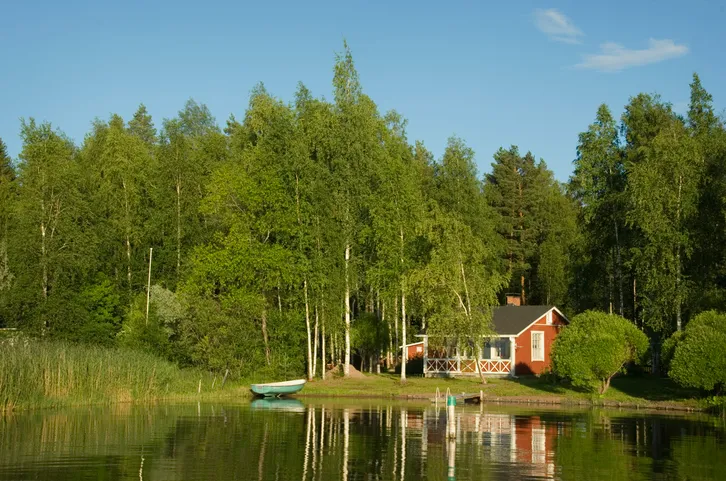
Finland is often seen as one of the best countries to retire in, especially for anyone who wants a safe, comfortable location to retire in. Those who love being surrounded by pristine nature will feel most at home here. However, harsh winters and a high cost of living can keep the more frugal retiree at bay. Your personal situation will decide if this haven of education and the midnight sun is the right place to spend your golden years.
Tips on Affording Retirement
- Moving abroad takes more than financial stability. A financial advisor can work with you to break down all the necessary preparations, such as what to expect with tax implications. However, finding the right financial advisor for you doesn’t have to be hard. SmartAsset’s free tool matches you with vetted financial advisors who serve your area, and you can have free introductory calls with your advisor matches to decide which one you feel is right for you. If you’re ready to find an advisor who can help you achieve your financial goals, get started now.
- Depending on the individual, one’s Social Security benefit value may be enough to cover these expenses. Using this Social Security calculator, you can estimate your benefit amount.
Photo credit: ©iStock.com/basiczto, ©iStock.com/Sasha_Suzi, ©iStock.com/ssiltane
Article Sources
All articles are reviewed and updated by SmartAsset’s fact-checkers for accuracy. Visit our Editorial Policy for more details on our overall journalistic standards.
- WHR Dashboard. https://data.worldhappiness.report/map. Accessed July 22, 2026.
- https://www.numbeo.com/cost-of-living/compare_countries_result.jsp?country1=United+States&country2=Finland. Accessed July 22, 2026.
- Diez, Daniel. “What Are the Cheapest Mortgage Rates in Europe in 2026?” Upscore, June 17, 2026, https://upscoreapp.com/what-are-the-cheapest-mortgage-rates-in-europe/.
- https://www.osac.gov/Content/report/6e852310-e628-4833-98d8-1d7ab6830933. Accessed July 22, 2026.
- “Helsinki February Weather, Average Temperature (Finland) – Weather Spark.” Weather Spark Expedia Hotels.Com Vrbo, https://weatherspark.com/m/91632/2/Average-Weather-in-February-in-Helsinki-Finland. Accessed July 22, 2026.