 Written by
  Edited by
  Edited by
  Reviewed by
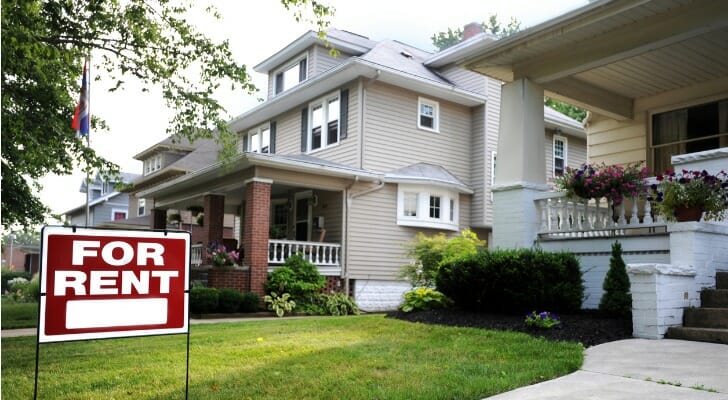
Receiving regular rental income can help you grow wealth and diversify your income streams, but you will owe federal and, where applicable, state income taxes on that income. Capital gains tax can also apply when you sell a rental property. To avoid these taxes taking too big of a chunk from your earnings, there are strategies you can employ, from leveraging tax exemptions and deductions to strategically timing your sale, that can make a substantial difference in your net earnings.
Do you have questions about planning your real estate investments? Consider speaking with a financial advisor.
How Rental Property Is Taxed
There are two dimensions to the tax picture when talking about rental properties. First, there’s the tax you pay on rental income paid to you. Second, there’s the taxes you might pay if you were to sell a rental property for a profit.
In terms of taxes on rental income, that income is taxed as ordinary income but is not subject to self-employment taxes, distinguishing it from wages or side-hustle earnings. In other words, rental income is taxed as ordinary income at whatever your regular tax bracket may be for the year. The good news is that you can reduce what you owe in income taxes on rental income by claiming deductions for depreciation and rental expenses, such as maintenance, upkeep and repairs.
Meanwhile, when you sell a rental property, you may owe capital gains tax on the sale. Capital gains tax generally applies when you sell an investment or asset for more than what you paid for it. The short-term capital gains tax rate is whatever your normal income tax rate is, and it applies to investments you hold for less than one year. So, for 2026, the maximum you could pay for short-term capital gains on rental property is 37%.
The table below breaks down the 2026 short-term capital gains tax rates by filing status:
| Rate | Single | Married Filing Jointly | Married Filing Separately | Head of Household |
|---|---|---|---|---|
| 10% | $0 – $12,400 | $0 – $24,800 | $0 – $12,400 | $0 – $17,700 |
| 12% | $12,401 – $50,400 | $24,801 – $100,800 | $12,401 – $50,400 | $17,701 – $67,450 |
| 22% | $50,401 – $105,700 | $100,801 – $211,400 | $50,401 – $105,700 | $67,451 – $105,700 |
| 24% | $105,701 – $201,775 | $211,401 – $403,550 | $105,701 – $201,775 | $105,701 – $201,775 |
| 32% | $201,776 – $256,225 | $403,551 – $512,450 | $201,776 – $256,225 | $201,776 – $256,200 |
| 35% | $256,226 – $640,600 | $512,451 – $768,700 | $256,226 – $384,350 | $256,201 – $640,600 |
| 37% | $640,601+ | $768,701+ | $384,351+ | $640,601+ |
Long-term capital gains tax rates, on the other hand, are set at 0%, 15% and 20%, based on your income. These rates apply to properties held for longer than one year. If you own rental property as an investment year over year, you may be more likely to deal with the long-term capital gains tax rate.
For reference, this table breaks down the 2026 long-term capital gains tax rates by filing status:
| Tax Rate | Individuals | Married Filing Jointly | Head of Household | Married Filing Separately |
|---|---|---|---|---|
| 0% | $0 – $49,450 | $0 – $98,900 | $0 – $66,200 | $0 – $49,450 |
| 15% | $49,451 – $545,500 | $98,901 – $613,700 | $66,201 – $579,600 | $49,451 – $306,850 |
| 20% | $545,501+ | $613,701+ | $579,601+ | $306,851+ |
Understanding Adjusted Cost Basis and Depreciation Recapture
When calculating capital gains on a rental property, your adjusted cost basis plays a key role in determining how much of your profit is taxable. The cost basis is generally what you paid for the property, plus certain expenses (like closing costs and major improvements), minus depreciation you’ve claimed over the years.
Depreciation allows property owners to deduct a portion of the building’s value each year to account for wear and tear. While this rental property deduction can lower your taxable rental income annually, it also reduces your property’s cost basis. When you sell the property, the IRS “recaptures” that depreciation by taxing it at a special rate, of up to 25%, separate from your standard capital gains rate.
For example, suppose you purchased a rental property for $400,000, allocating $300,000 to the building and $100,000 to the land. Over 10 years, you claimed $109,000 in total depreciation. You later sell the property for $550,000 and incur $25,000 in selling expenses.
Your adjusted cost basis would be:
- Purchase price: $400,000
- Minus depreciation: –$109,000
- Plus selling costs: +$25,000
- Adjusted cost basis: $316,000
Based on these figures, the total gain on the sale is $550,000 – $316,000 = $234,000.
Of that, $109,000 is taxed as depreciation recapture (up to 25%), while the remaining $125,000 is taxed at long-term capital gains rates (0%, 15%, or 20%, depending on your income).
This means your actual tax liability can be higher than you expect if you’ve owned the property for many years and claimed significant depreciation.
To help minimize depreciation recapture and other taxes, it’s often worth consulting a financial advisor or tax professional before selling an investment property.
Reducing Capital Gains on a Rental Property

If you’re interested in minimizing capital gains tax on rental property or deferring it, there are three avenues open to you:
Take Advantage of Tax-Loss Harvesting
Tax-loss harvesting is a strategy that allows you to balance out capital gains with capital losses in order to minimize tax liability. So, if your rental property appreciated significantly in value since you purchased it, but your stock portfolio tanked, you could sell those stocks at a loss to offset your capital gains on the rental property.
Essentially, this could cut your capital gains tax bill to zero if you have enough investment losses to cancel out the profits. This strategy assumes, of course, that some of your other investments didn’t perform as well over the previous year.
If your entire portfolio did well over the past year, then you may need to consider other ways to cut your taxes than loss harvesting. It may not yield enough of a benefit to offset all of your capital gains from selling a rental property.
Use a 1031 Exchange
Section 1031 of the Internal Revenue Code allows you to defer paying capital gains tax on rental properties if you use the proceeds from the sale to purchase another investment property, known as a 1031 exchange. You don’t get to avoid paying taxes on capital gains altogether; instead, you’re deferring it until you sell the replacement property.
There are a few rules to know about Section 1031 exchanges. First, this is a like-kind exchange, which means that the rental property you buy must be the same type of property as the one you sold. The good news is that the IRS allows for some flexibility in how like-kind is defined. So, for example, if you own a duplex, and you decide to sell it and use the proceeds to purchase a single-family rental home, that could still meet the criteria for a 1031 exchange.
You also need to be aware of the timing and procedural requirements when executing a 1031 exchange. If you want to use this strategy to defer capital gains tax on a rental property, you must identify a potential replacement property within 45 days and complete the closing on the new property within 180 days.
Additionally, the sale proceeds must be held by a qualified intermediary throughout the process; you cannot take direct possession of the funds at any point, or the exchange will be disqualified. Because the rules are extremely strict, it is strongly recommended that you work with an experienced tax professional or 1031 exchange specialist to ensure full compliance and avoid triggering a taxable event.
Again, a 1031 exchange doesn’t let you off the hook for paying capital gains tax on rental property. But it could buy you time for paying those taxes owed if you’re interested in swapping out your rental property for a new one.
Estimate your overall income tax liability with our calculator to see how your earnings may affect what you owe.
Convert a Rental Property to a Primary Residence
One perk of being a homeowner is that the IRS offers a significant tax break if you sell at a profit. Single filers can exclude up to $250,000 in gains from the sale of a primary home from taxation. That amount doubles to $500,000 for married couples who file a joint return.
If you like your rental property enough to live in it, you could convert it to a primary residence to reduce your capital gains tax liability. However, you would still be required to pay depreciation recapture tax on any depreciation previously claimed on the property. There are some rules, however, that the IRS enforces. For one, you have to own the home for at least five years. Additionally, you have to live in it for at least two out of five years before you sell it.
This might be something to consider if you’re no longer interested in owning a rental property for income or you’d like to move from your current home into a rental.
Net Investment Income Tax on Rental Property Sales
There’s one more tax layer that rental property investors need to know about, and it’s one that often gets overlooked. The 3.8% net investment income tax (NIIT) can apply on top of your capital gains tax and depreciation recapture tax when you sell a rental property. For a profitable sale, this surtax alone can add thousands of dollars to your total bill.
The NIIT kicks in when your modified adjusted gross income exceeds $200,000 if you’re a single filer or $250,000 if you’re married filing jointly. Unlike most tax thresholds, these amounts are not adjusted for inflation, which means more people cross them every year as incomes rise. Once you’re above the threshold, the 3.8% tax applies to whichever is smaller: your total net investment income or the amount by which your MAGI exceeds the threshold.
Rental income counts as investment income for NIIT purposes. So if you’re collecting rent and your modified adjusted gross income (MAGI) is above the threshold, you’re paying the 3.8% surtax on that rental income on top of your ordinary income tax rate. A landlord in the 24% bracket with MAGI above the threshold is effectively paying 27.8% on rental income before any deductions are applied.
The NIIT also applies when you sell a rental property at a gain. Both the long-term capital gains portion and the depreciation recapture portion of your profit can be subject to the surtax. Using the example from earlier in this article, where the total gain on the sale was $234,000, a seller with MAGI above the threshold could owe an additional $8,892 in NIIT on top of everything else. That brings the effective tax rate on the sale well above what the capital gains and depreciation recapture tables alone would suggest.
Rental property investors are especially likely to hit the NIIT threshold because rental income itself pushes MAGI higher. A landlord earning $60,000 a year in rental income on top of a $180,000 salary already has a MAGI of $240,000 as a single filer, which is above the threshold before a property sale even enters the picture. Add a sale with a six-figure gain and the NIIT exposure grows quickly. For investors who own multiple properties, the combination of ongoing rental income and sale proceeds in the same year can create a significant surtax bill.
The good news is that the tax reduction strategies covered later in this article can also help with the NIIT. A 1031 exchange defers the gain entirely, which means the NIIT is deferred along with it. Tax-loss harvesting reduces the taxable gain, which lowers the amount subject to the surtax. Converting a rental to a primary residence and using the $250,000 or $500,000 exclusion can eliminate the NIIT on the excluded portion of the gain. Knowing the NIIT is part of the equation makes those strategies even more valuable, especially for higher-income investors who would otherwise face the surtax on every dollar of profit.
Bottom Line

Capital gains tax on rental properties can quickly add up if you’re able to sell a property you own for a large profit. Keeping an eye on conditions in the housing market and reviewing your overall financial situation can help you determine whether it’s the right time to sell to minimize taxes. For example, if your regular income is down for the year, then selling a rental property at a capital gain may not carry as much weight if you’re in a lower tax bracket. Talking to a financial advisor can help you find the best ways to manage capital gains tax.
Tips on Taxes
- Tax planning is a key part of financial planning, which is something for which a professional can provide excellent guidance. Finding a financial advisor doesn’t have to be hard. SmartAsset’s free tool matches you with vetted financial advisors who serve your area. You can have a free introductory call with your advisor matches to decide which one you feel is right for you. If you’re ready to find an advisor who can help you achieve your financial goals, get started now.
- Tax-loss harvesting isn’t limited to rental properties. You can also use stock losses to offset stock gains, for example. One thing to keep in mind, however, is the IRS wash-sale rule. This rule specifies that you can’t sell a losing stock and then replace it with a substantially similar one in the 30 days before or after the sale.
Photo credit: ©iStock.com/xeni4ka, ©iStock.com/designer491, ©iStock.com/supawat bursuk